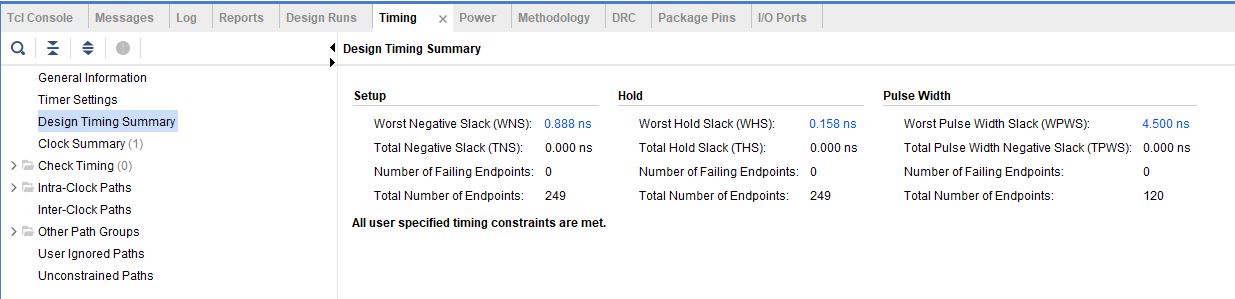
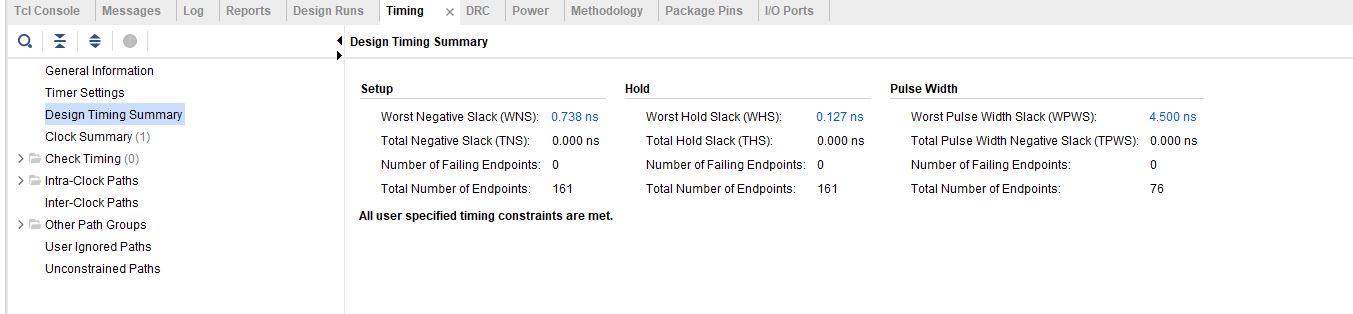
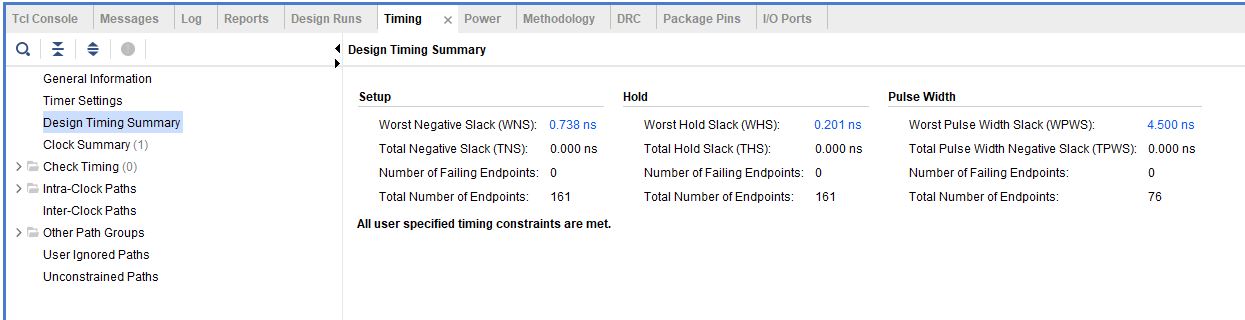
VHDL Character Set

library ieee;
use ieee.std_logic_1164.all;
use ieee.numeric_std.all;

entity section_1 is
port ( clk : in std_logic;
rst : in std_logic;
char_out : out character);
end entity;

architecture behaviour of section_1 is
signal count : integer range 0 to 140;
signal char_out_s : character;

begin

— basic counter

process (clk)
begin
if (rising_edge (clk)) then
if ((count = 0) or (count < 139)) then
count <= count + 1;
elsif (count = 140) then
count <= 0;
end if;
end if;
end process;

— VHDL character set

process (clk)
begin
if (rising_edge (clk)) then
case count is

 when   32    =>  char_out_s <= ' ';  -- Space 
 when   33  =>  char_out_s <= '!';  -- Exclamation mark
 when   34  =>  char_out_s <= '"';  -- "   Double quotes (or s
 when   35  =>  char_out_s <= '#';  -- Number
 when   36  =>  char_out_s <= '$';  -- Dollar
 when   37  =>  char_out_s <= '%';  -- Per cent sign
 when   38  =>  char_out_s <= '&';  -- &    Ampersand
 when   39  =>  char_out_s <= ''';  -- Single quote
 when   40  =>  char_out_s <= '(';  -- Open parenthesis (or open b
 when   41  =>  char_out_s <= ')';  -- Close parenthesis (or close
 when   42  =>  char_out_s <= '*';  -- Asterisk
 when   43  =>  char_out_s <= '+';  -- Plus
 when   44  =>  char_out_s <= ',';  -- Comma
 when   45  =>  char_out_s <= '-';  -- Hyphen
 when   46  =>  char_out_s <= '.';  -- Period, dot or full stop
    when   47  =>  char_out_s <= '/';  -- Slash or divide
   when   48  =>  char_out_s <= '0';  -- Zero
  when   49  =>  char_out_s <= '1';  -- one
 when   50  =>  char_out_s <= '2';  -- Two
 when   51    =>  char_out_s <= '3';  -- Three
 when   52  =>  char_out_s <= '4';  -- Four
 when   53  =>  char_out_s <= '5';  -- Five
 when   54  =>  char_out_s <= '6';  -- Six
 when   55  =>  char_out_s <= '7';  -- Seven
 when   56  =>  char_out_s <= '8';  -- Eight
 when   57  =>  char_out_s <= '9';  -- Nine
 when   58    =>  char_out_s <= ':';  -- Colon
 when   59  =>  char_out_s <= ';';  -- Semicolon
 when   60  =>  char_out_s <= '<';  -- < Less than (or open 
 when   61  =>  char_out_s <= '=';  -- Equals
 when   62  =>  char_out_s <= '>';  -- > Greater than (or cl
 when   63  =>  char_out_s <= '?';  -- Question mark
 when   64  =>  char_out_s <= '@';  -- At symbol
 when   65  =>  char_out_s <= 'A';  -- Uppercase A
 when   66  =>  char_out_s <= 'B';  -- Uppercase B
 when   67  =>  char_out_s <= 'C';  -- Uppercase C
 when   68  =>  char_out_s <= 'D';  -- Uppercase D
 when   69  =>  char_out_s <= 'E';  -- Uppercase E
 when   70  =>  char_out_s <= 'F';  -- Uppercase F
 when   71  =>  char_out_s <= 'G';  -- Uppercase G
 when   72  =>  char_out_s <= 'H';  -- Uppercase H
 when   73  =>  char_out_s <= 'I';  -- Uppercase I
 when   74  =>  char_out_s <= 'J';  -- Uppercase J
 when   75  =>  char_out_s <= 'K';  -- Uppercase K
 when   76  =>  char_out_s <= 'L';  -- Uppercase L
 when   77  =>  char_out_s <= 'M';  -- Uppercase M
 when   78  =>  char_out_s <= 'N';  -- Uppercase N
 when   79  =>  char_out_s <= 'O';  -- Uppercase O
 when   80  =>  char_out_s <= 'P';  -- Uppercase P
 when   81  =>  char_out_s <= 'Q';  -- Uppercase Q
 when   82  =>  char_out_s <= 'R';  -- Uppercase R
 when   83  =>  char_out_s <= 'S';  -- Uppercase S
 when   84  =>  char_out_s <= 'T';  -- Uppercase T
 when   85  =>  char_out_s <= 'U';  -- Uppercase U
 when   86  =>  char_out_s <= 'V';  -- Uppercase V
 when   87  =>  char_out_s <= 'W';  -- Uppercase W
 when   88  =>  char_out_s <= 'X';  -- Uppercase X
 when   89  =>  char_out_s <= 'Y';  -- Uppercase Y
 when   90  =>  char_out_s <= 'Z';  -- Uppercase Z
 when   91  =>  char_out_s <= '[';  -- Opening bracket
 when   92  =>  char_out_s <= '\';  -- Backslash
 when   93    =>  char_out_s <= ']';  -- Closing bracket
 when   94    =>  char_out_s <= '^';  -- Caret - circumflex
 when   95  =>  char_out_s <= '_';  -- Underscore
 when   96  =>  char_out_s <= '`';  -- Grave accent
 when   97  =>  char_out_s <= 'a';  -- Lowercase a
 when   98  =>  char_out_s <= 'b';  -- Lowercase b
 when   99  =>  char_out_s <= 'c';  -- Lowercase c
 when   100 =>  char_out_s <= 'd';  -- Lowercase d
 when   101 =>  char_out_s <= 'e';  -- Lowercase e
 when   102 =>  char_out_s <= 'f';  -- Lowercase f
 when   103 =>  char_out_s <= 'g';  -- Lowercase g
 when   104 =>  char_out_s <= 'h';  -- Lowercase h
 when   105 =>  char_out_s <= 'i';  -- Lowercase i
 when   106 =>  char_out_s <= 'j';  -- Lowercase j
 when   107 =>  char_out_s <= 'k';  -- Lowercase k
 when   108 =>  char_out_s <= 'l';  -- Lowercase l
 when   109 =>  char_out_s <= 'm';  -- Lowercase m
 when   110 =>  char_out_s <= 'n';  -- Lowercase n
 when   111 =>  char_out_s <= 'o';  -- Lowercase o
 when   112 =>  char_out_s <= 'p';  -- Lowercase p
 when   113 =>  char_out_s <= 'q';  -- Lowercase q
 when   114 =>  char_out_s <= 'r';  -- Lowercase r
 when   115 =>  char_out_s <= 's';  -- Lowercase s
 when   116 =>  char_out_s <= 't';  -- Lowercase t
 when   117 =>  char_out_s <= 'u';  -- Lowercase u
 when   118 =>  char_out_s <= 'v';  -- Lowercase v
 when   119 =>  char_out_s <= 'w';  -- Lowercase w
 when   120 =>  char_out_s <= 'x';  -- Lowercase x
 when   121 =>  char_out_s <= 'y';  -- Lowercase y
 when   122 =>  char_out_s <= 'z';  -- Lowercase z
 when   123 =>  char_out_s <= '{';  -- Opening brace
 when   124 =>  char_out_s <= '|';  -- Vertical bar
 when   125 =>  char_out_s <= '}';  -- Closing brace
 when   126 =>  char_out_s <= '~';  -- Equivalency sign - tilde
 when   127 =>  char_out_s <= ' ';  -- Delete
 when others => null; 

end case;
end if;
end process;

char_out <= char_out_s;

end;
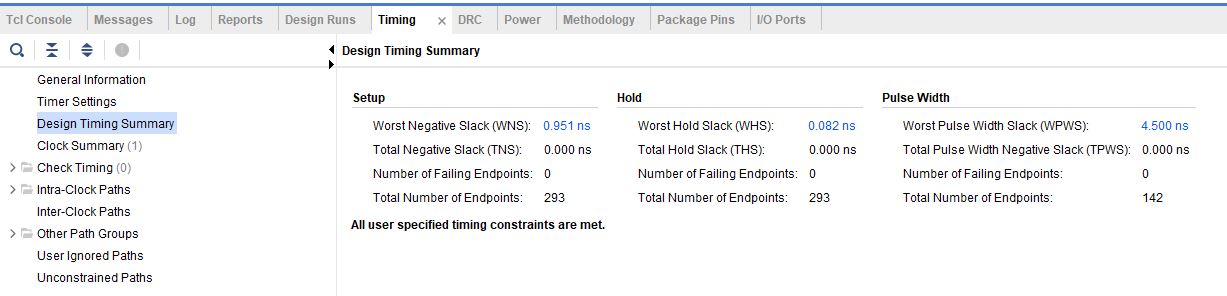
Pipelining in VHDL (4 stage)

library ieee;
use ieee.std_logic_1164.all;
use ieee.std_logic_unsigned.all;
use ieee.numeric_std.all;

entity accum is
port (
clk : in std_logic;
rst : in std_logic;
port0 : in std_logic_vector (7 downto 0);
port1 : in std_logic_vector (7 downto 0);
port2 : in std_logic_vector (7 downto 0);
port3 : in std_logic_vector (7 downto 0);
port4 : in std_logic_vector (7 downto 0);
port5 : in std_logic_vector (7 downto 0);
port6 : in std_logic_vector (7 downto 0);
port7 : in std_logic_vector (7 downto 0);
portout : out std_logic_vector (10 downto 0));
end entity;

— 4 stage pipeline
architecture loop_imp5 of accum is

type capture_t is array (0 to 7) of signed (10 downto 0);
signal capture_s : capture_t;

signal capture_sum_v_1 : signed(10 downto 0);
signal capture_sum_v_2 : signed(10 downto 0);
signal capture_sum_v_3 : signed(10 downto 0);
signal capture_sum_v_4 : signed(10 downto 0);
signal capture_sum_v_12 : signed(10 downto 0);
signal capture_sum_v_34 : signed(10 downto 0);

begin

process (clk, rst)

begin

if (rst = ‘1’) then
capture_s <= (others => (others => ‘0’));
elsif (rising_edge (clk)) then

capture_s(0) <= to_signed(to_integer(signed(port0)), 11);
capture_s(1) <= to_signed(to_integer(signed(port1)), 11);
capture_s(2) <= to_signed(to_integer(signed(port2)), 11);
capture_s(3) <= to_signed(to_integer(signed(port3)), 11);
capture_s(4) <= to_signed(to_integer(signed(port4)), 11);
capture_s(5) <= to_signed(to_integer(signed(port5)), 11);
capture_s(6) <= to_signed(to_integer(signed(port6)), 11);
capture_s(7) <= to_signed(to_integer(signed(port7)), 11);

capture_sum_v_1 <= capture_s(0) + capture_s(1);
capture_sum_v_2 <= capture_s(2) + capture_s(3);
capture_sum_v_3 <= capture_s(4) + capture_s(5);
capture_sum_v_4 <= capture_s(6) + capture_s(7);

capture_sum_v_12 <= capture_sum_v_1 + capture_sum_v_2;
capture_sum_v_34 <= capture_sum_v_3 + capture_sum_v_4;

portout <= std_logic_vector(capture_sum_v_12 + capture_sum_v_34);

end if;
end process;
end loop_imp5;

Pipelining in VHDL (3 stage)

library ieee;
use ieee.std_logic_1164.all;
use ieee.std_logic_unsigned.all;
use ieee.numeric_std.all;

entity accum is
port (
clk : in std_logic;
rst : in std_logic;
port0 : in std_logic_vector (7 downto 0);
port1 : in std_logic_vector (7 downto 0);
port2 : in std_logic_vector (7 downto 0);
port3 : in std_logic_vector (7 downto 0);
port4 : in std_logic_vector (7 downto 0);
port5 : in std_logic_vector (7 downto 0);
port6 : in std_logic_vector (7 downto 0);
port7 : in std_logic_vector (7 downto 0);
portout : out std_logic_vector (10 downto 0));
end entity;

— 3 stage pipeline
architecture loop_imp4 of accum is

type capture_t is array (0 to 7) of signed (10 downto 0);
signal capture_s : capture_t;

signal capture_sum_v_1 : signed(10 downto 0);
signal capture_sum_v_2 : signed(10 downto 0);
signal capture_sum_v_3 : signed(10 downto 0);
signal capture_sum_v_4 : signed(10 downto 0);

begin

process (clk, rst)

begin

if (rst = ‘1’) then
capture_s <= (others => (others => ‘0’));
elsif (rising_edge (clk)) then

capture_s(0) <= to_signed(to_integer(signed(port0)), 11);
capture_s(1) <= to_signed(to_integer(signed(port1)), 11);
capture_s(2) <= to_signed(to_integer(signed(port2)), 11);
capture_s(3) <= to_signed(to_integer(signed(port3)), 11);
capture_s(4) <= to_signed(to_integer(signed(port4)), 11);
capture_s(5) <= to_signed(to_integer(signed(port5)), 11);
capture_s(6) <= to_signed(to_integer(signed(port6)), 11);
capture_s(7) <= to_signed(to_integer(signed(port7)), 11);

capture_sum_v_1 <= capture_s(0) + capture_s(1);
capture_sum_v_2 <= capture_s(2) + capture_s(3);
capture_sum_v_3 <= capture_s(4) + capture_s(5);
capture_sum_v_4 <= capture_s(6) + capture_s(7);

portout <= std_logic_vector(capture_sum_v_1 + capture_sum_v_2 + capture_sum_v_3 + capture_sum_v_4);

end if;
end process;
end loop_imp4;

Pipe lining in VHDL (2 stage using For Loops)

library ieee;
use ieee.std_logic_1164.all;
use ieee.std_logic_unsigned.all;
use ieee.numeric_std.all;

entity accum is
port (
clk : in std_logic;
rst : in std_logic;
port0 : in std_logic_vector (7 downto 0);
port1 : in std_logic_vector (7 downto 0);
port2 : in std_logic_vector (7 downto 0);
port3 : in std_logic_vector (7 downto 0);
port4 : in std_logic_vector (7 downto 0);
port5 : in std_logic_vector (7 downto 0);
port6 : in std_logic_vector (7 downto 0);
port7 : in std_logic_vector (7 downto 0);
portout : out std_logic_vector (10 downto 0));
end entity;

— 2 stage pipeline using for loop
architecture loop_imp2 of accum is

type capture_t is array (0 to 7) of signed (10 downto 0);
signal capture_s : capture_t;

begin

process (clk, rst)

variable capture_sum_v : signed(10 downto 0);

begin

if (rst = ‘1’) then
capture_s <= (others => (others => ‘0’));
elsif (rising_edge (clk)) then

capture_s(0) <= to_signed(to_integer(signed(port0)), 11);
capture_s(1) <= to_signed(to_integer(signed(port1)), 11);
capture_s(2) <= to_signed(to_integer(signed(port2)), 11);
capture_s(3) <= to_signed(to_integer(signed(port3)), 11);
capture_s(4) <= to_signed(to_integer(signed(port4)), 11);
capture_s(5) <= to_signed(to_integer(signed(port5)), 11);
capture_s(6) <= to_signed(to_integer(signed(port6)), 11);
capture_s(7) <= to_signed(to_integer(signed(port7)), 11);

capture_sum_v := (others => ‘0’);

for i in 0 to 7 loop
capture_sum_v := capture_sum_v + capture_s(i);
end loop;

portout <= std_logic_vector(capture_sum_v);

end if;

end process;

end loop_imp2;

Pipelining in VHDL (2 stage)

library ieee;
use ieee.std_logic_1164.all;
use ieee.std_logic_unsigned.all;
use ieee.numeric_std.all;

entity accum is
port (
clk : in std_logic;
rst : in std_logic;
port0 : in std_logic_vector (7 downto 0);
port1 : in std_logic_vector (7 downto 0);
port2 : in std_logic_vector (7 downto 0);
port3 : in std_logic_vector (7 downto 0);
port4 : in std_logic_vector (7 downto 0);
port5 : in std_logic_vector (7 downto 0);
port6 : in std_logic_vector (7 downto 0);
port7 : in std_logic_vector (7 downto 0);
portout : out std_logic_vector (10 downto 0));
end entity;

— 2 stage pipeline
architecture loop_imp1 of accum is

signal p0 : signed (10 downto 0);
signal p1 : signed (10 downto 0);
signal p2 : signed (10 downto 0);
signal p3 : signed (10 downto 0);
signal p4 : signed (10 downto 0);
signal p5 : signed (10 downto 0);
signal p6 : signed (10 downto 0);
signal p7 : signed (10 downto 0);

begin

process (clk, rst)
begin

if (rst = ‘0’) then

p0 <= (others => ‘0’);
p1 <= (others => ‘0’);
p2 <= (others => ‘0’);
p3 <= (others => ‘0’);
p4 <= (others => ‘0’);
p5 <= (others => ‘0’);
p6 <= (others => ‘0’);
p7 <= (others => ‘0’);

portout <= (others => ‘0’);

elsif (rising_edge (clk)) then

p0 <= resize (signed((port0)), 11) ;
p1 <= resize (signed((port1)), 11) ;
p2 <= resize (signed((port2)), 11) ;
p3 <= resize (signed((port3)), 11) ;
p4 <= resize (signed((port4)), 11) ;
p5 <= resize (signed((port5)), 11) ;
p6 <= resize (signed((port6)), 11) ;
p7 <= resize (signed((port7)), 11) ;

portout <= std_logic_vector(p0 + p1 + p2 + p3 + p4 + p5 + p6 + p7);

end if;
end process;

end loop_imp1;

Pulse Stretcher VHDL Code

library ieee;
use ieee.std_logic_1164.all;

entity simple_pulse_stretcher is
end simple_pulse_stretcher;

architecture behaviour of simple_pulse_stretcher is

signal clk_100 : std_logic := ‘0’;
signal clk_10 : std_logic := ‘0’;
signal sig_100 : std_logic := ‘0’;
signal sig_10_before_stretch : std_logic := ‘0’;
signal sig_100_after_stretch : std_logic := ‘0’;
signal sig_10_after_stretch : std_logic := ‘0’;
signal count : integer range 0 to 102:= 0;
signal dum : std_logic_vector (9 downto 0):= (others => ‘0’);

— pulse stretcher
procedure pulse_stretch ( signal ori : in std_logic; signal dum : inout std_logic_vector (9 downto 0); signal str : out std_logic) is
begin
dum(0) <= ori;
for i in 0 to 8 loop
dum(i+1) <= dum(i);
end loop;
str <= or(dum);
end pulse_stretch;

begin

— clock generation

clk_100 <= not clk_100 after 10 ns;
clk_10 <= not clk_10 after 100 ns;

process (clk_100)
begin
if (rising_edge (clk_100)) then
pulse_stretch( sig_100, dum, sig_100_after_stretch);
end if;
end process;

process (clk_100)
begin
if (rising_edge (clk_100)) then
if (count < 101 ) then
count <= count + 1;
else
count <= 0;
end if;
end if;
end process;

process (clk_100)
begin
if (rising_edge (clk_100)) then
if (count = 100) then
sig_100 <= ‘1’;
else
sig_100 <= ‘0’;
end if;
end if;
end process;

process (clk_10)
begin
if (rising_edge (clk_10)) then
sig_10_before_stretch <= sig_100;
sig_10_after_stretch <= sig_100_after_stretch;
end if;
end process;

end behaviour;